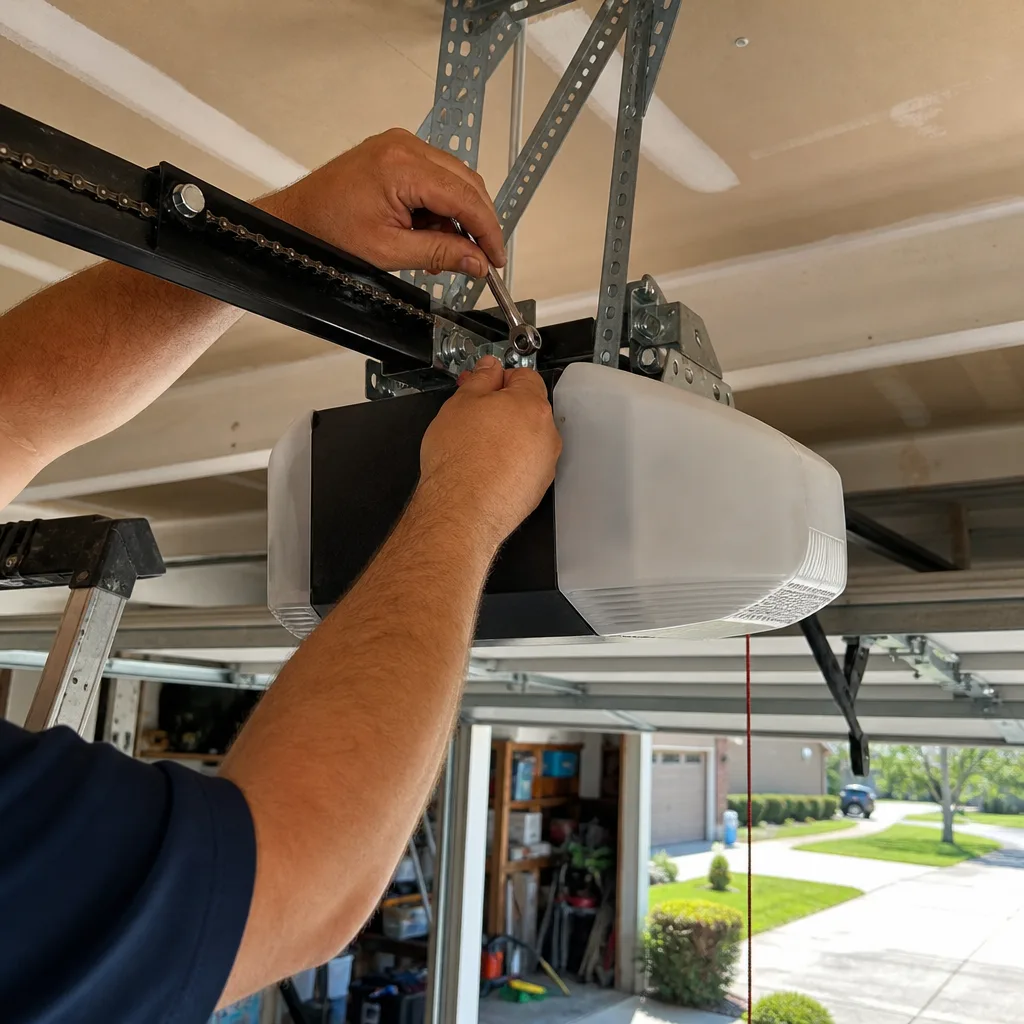
Last updated November 21, 2026
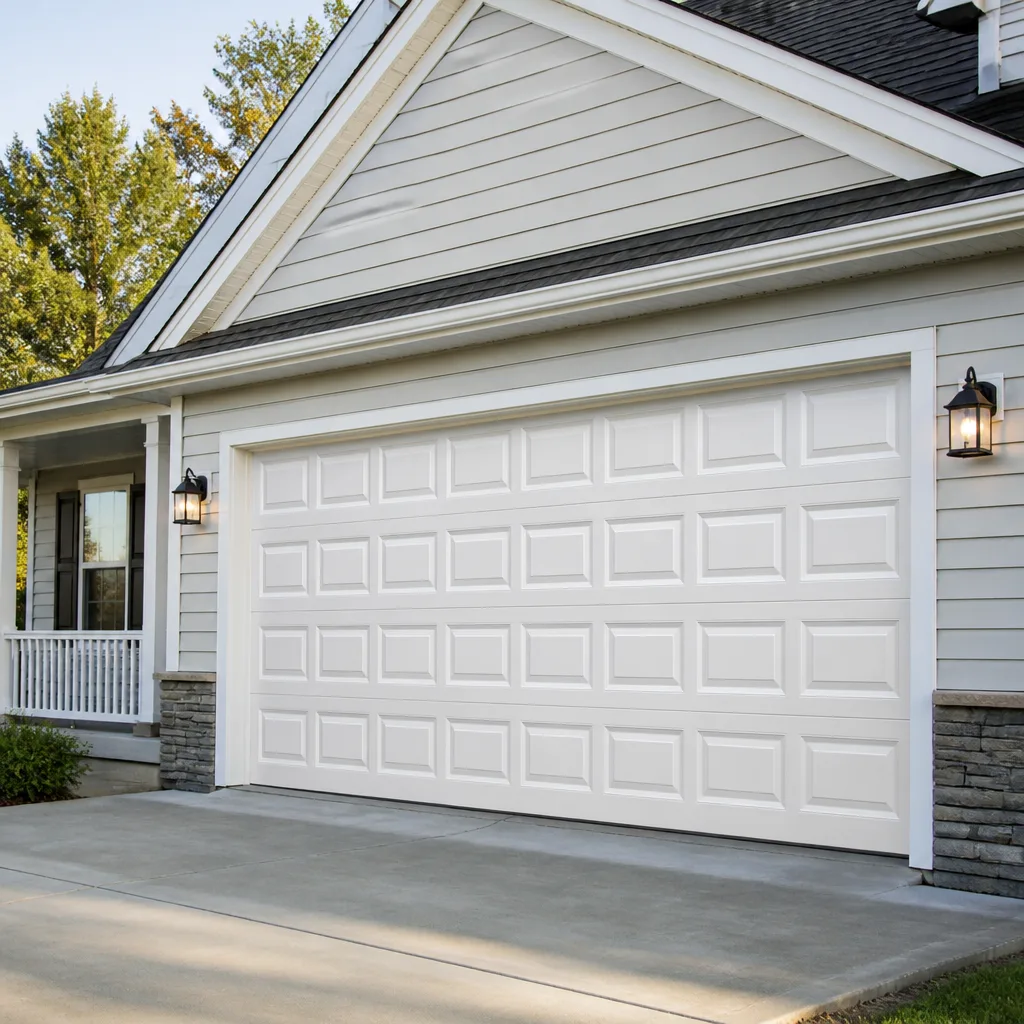 Raised-panel steel
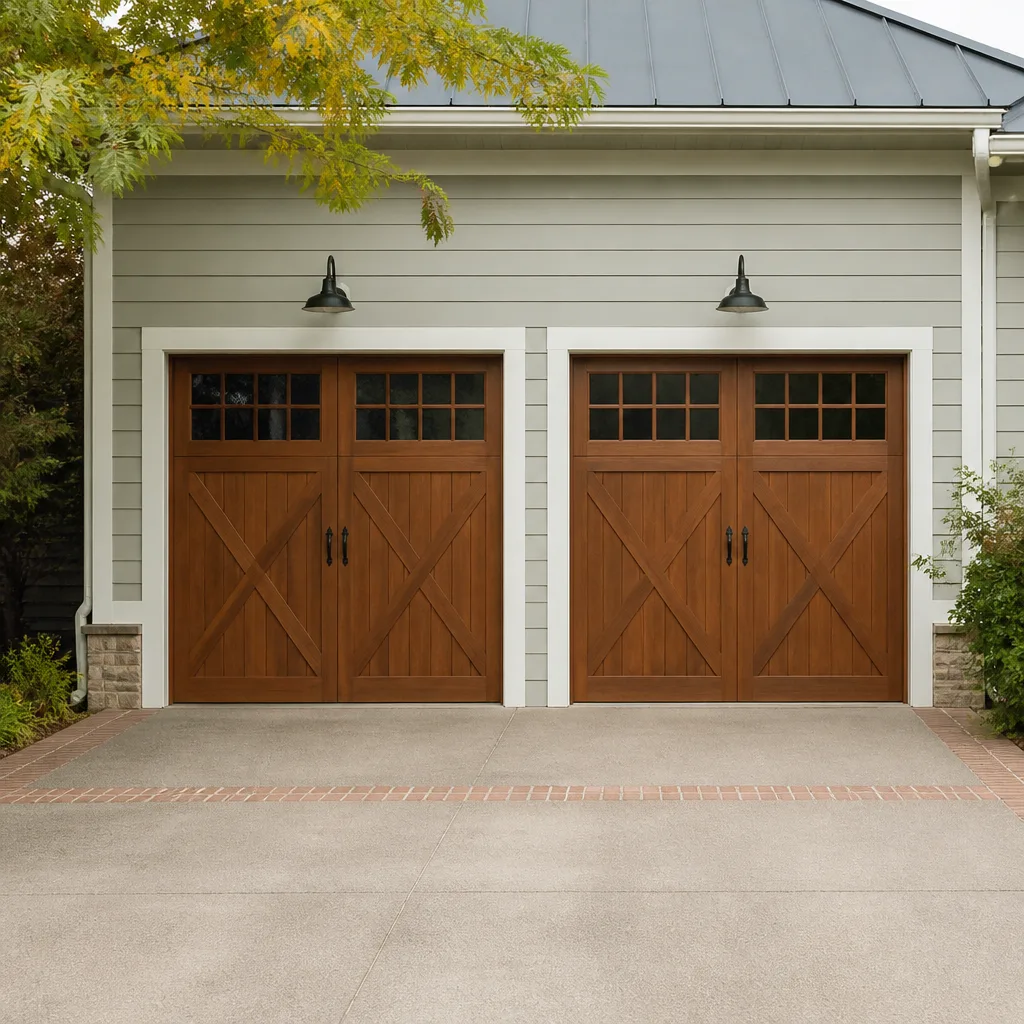 Carriage house
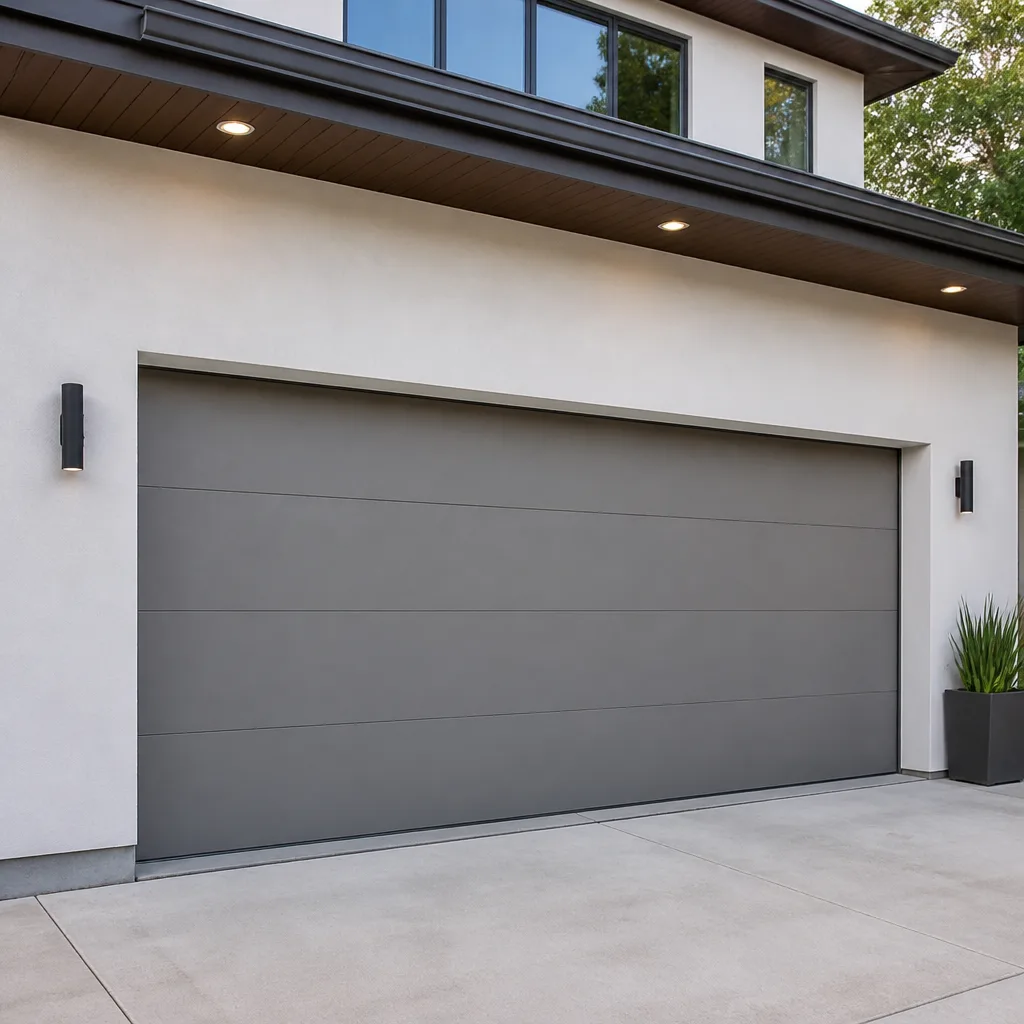 Modern flush
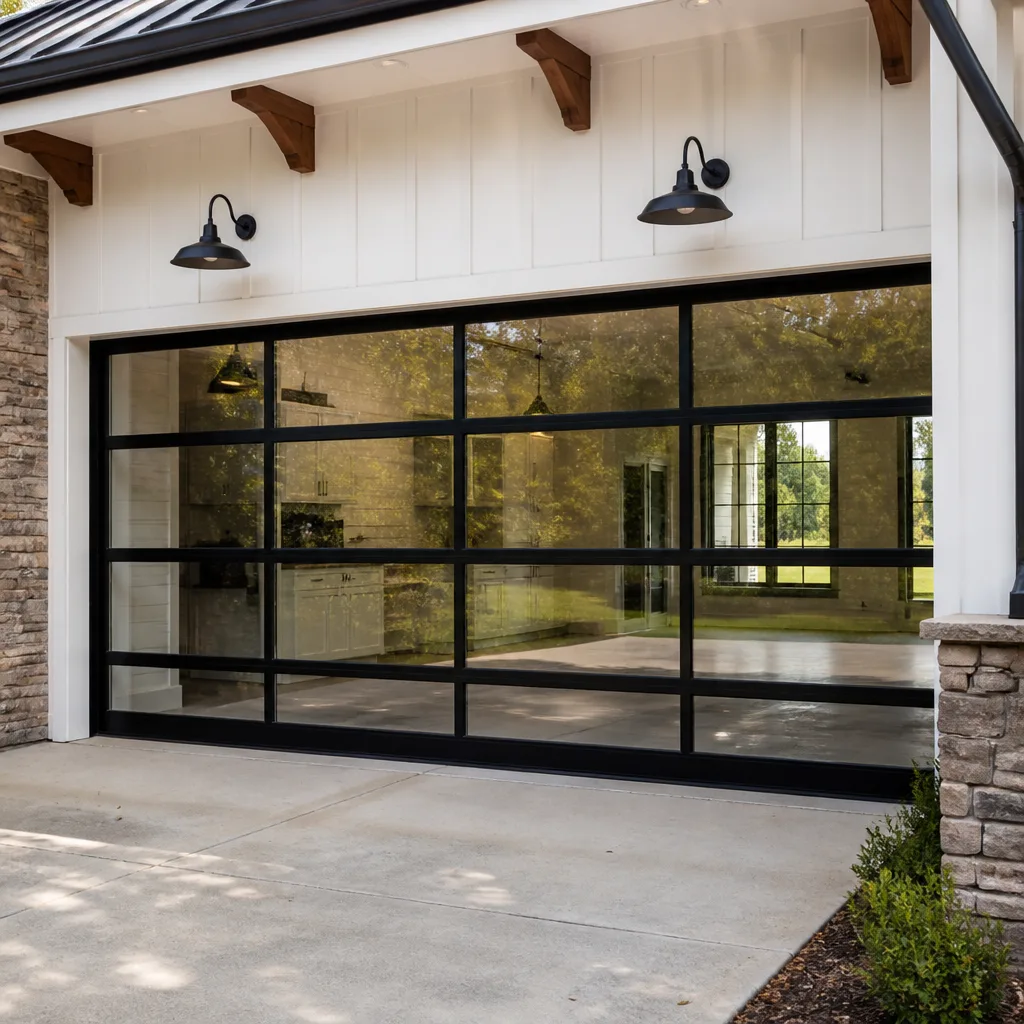 Full-view glass
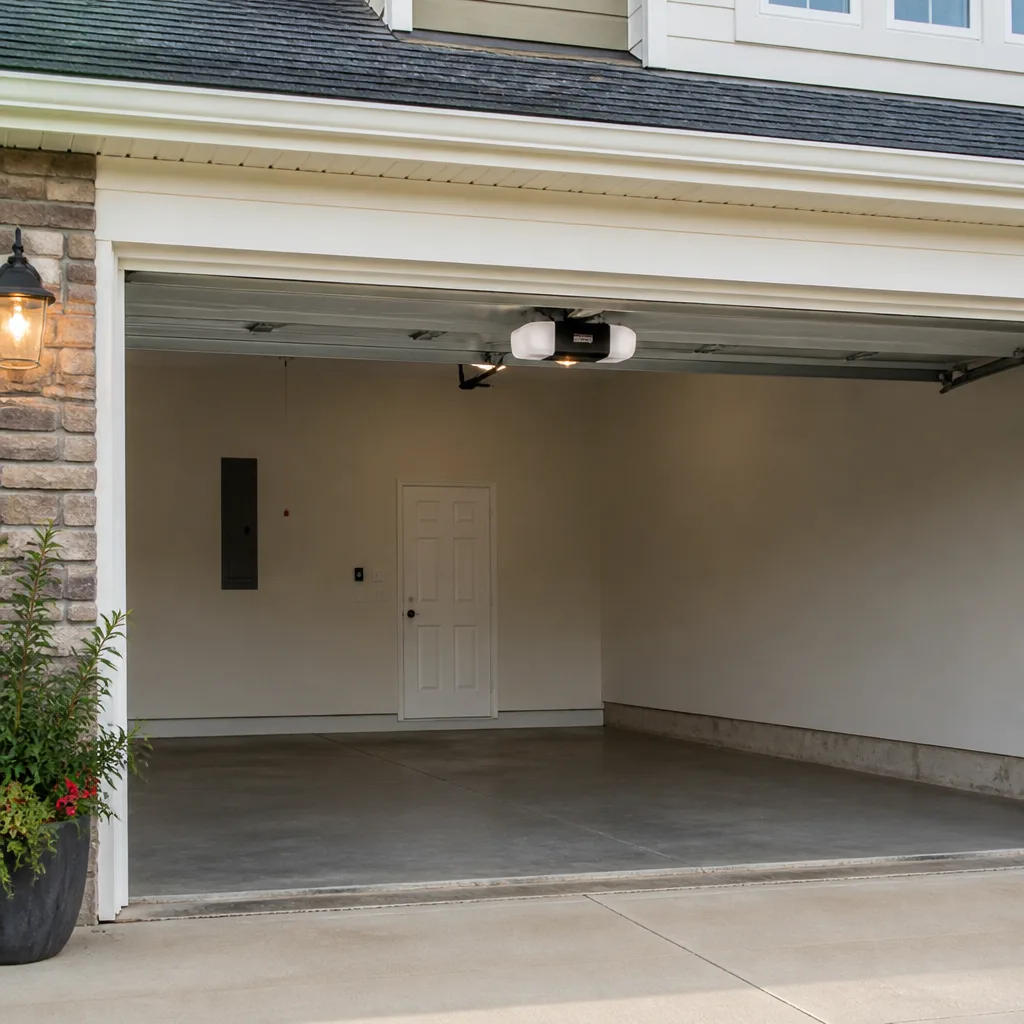 LiftMaster openers
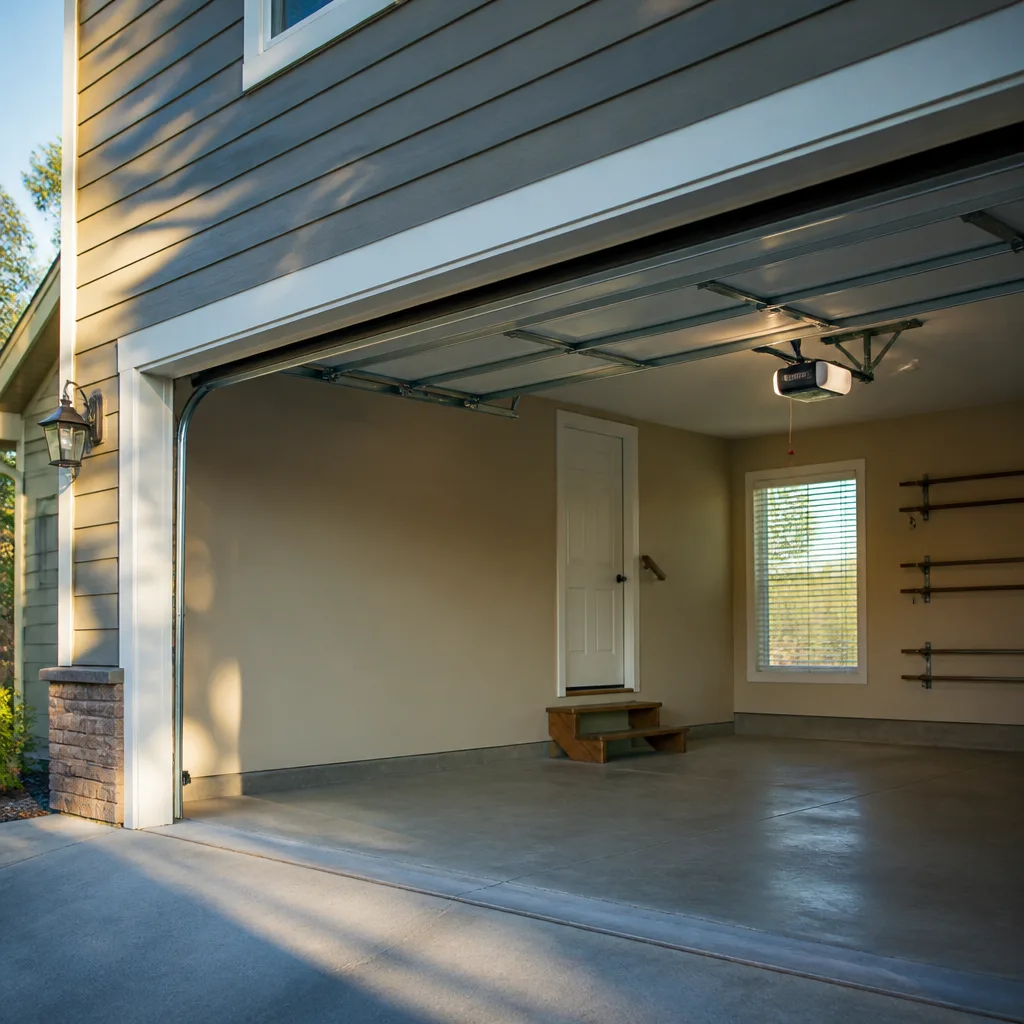 Chamberlain openers
Full 25-point door and opener safety check with every visit - springs, cables, rollers, tracks, and your LiftMaster or Chamberlain opener included
You get a price before we start. It does not change when the pro arrives.
Get your free estimateDIY vs Professional Garage Door: The Polaris Homeowner’s Decision Guide
Most of the DIY-vs-pro garage door debate gets the danger backwards. People worry about sensor alignment and lubrication, the easy stuff, then watch a video and decide a torsion spring looks manageable too. It isn’t. A torsion spring can store roughly 100 foot-pounds of torque, and releasing that energy the wrong way doesn’t just break a door, it injures people. This guide splits garage door work into what a careful homeowner can handle and what requires a trained specialist, task by task. We’ll cover tool costs, warranty gaps, liability, and a simple framework for deciding. If you’d rather start with the basics, our garage door repair page covers the fundamentals. Below is the honest version for Polaris homeowners.
Quick Answer
Low-stakes tasks like sensor alignment, lubrication, and remote reprogramming are safe for a competent homeowner to handle. Anything involving tension, springs, cables, or track realignment should go to a garage door specialist every time, because the tools, the training, and the injury risk make DIY a bad trade. Around Polaris, professional spring and cable work is usually quoted up front before anything starts, so there’s no mystery invoice.
Styles & brands we work with
- Raised-panel steel
- Carriage house
- Modern flush
- Full-view glass
- LiftMaster openers
- Chamberlain openers
Table of Contents
- Why the Danger Gets Undersold (and the Easy Tasks Overthought)
- Task-by-Task: What You Can Do and What You Can’t
- The Real Cost of DIY Spring Replacement
- How DIY Work Can Void Your Opener and Door Warranty
- The Liability Question Nobody Reads
- Tools and Time: DIY vs a Professional Call
- A Framework for Making the Decision
- What Makes Polaris Doors Different
Why the Danger Gets Undersold (and the Easy Tasks Overthought)
Search “garage door sensor” and half the results tell you to call a pro. Search “garage door spring replacement” and you’ll find confident tutorials from people who survived the job once. Both signal the same misunderstanding. The easy parts of garage door work get outsourced out of caution, and the genuinely dangerous parts get attempted out of confidence. We see the result in Polaris often: a homeowner replaces a sensor themselves when they didn’t need to, then struggles through a spring climb because a video made it look routine.
Here’s the physics that tutorials gloss over. A standard torsion spring holds the entire weight of the door under tension, coiled hundreds of times. When you wind it, you’re loading a mechanical battery. When it releases, it does so instantly and with force. A wound torsion spring can break a wrist, a jaw, or worse. There’s no version of that component where “slow and careful” removes the risk. The energy is the same whether you’re a homeowner with a YouTube tab open or a technician with up to 11 years of experience.
What does deserve a DIY attempt:
- Aligning your photo-eye safety sensors (the two units at the bottom of the track)
- Lubricating hinges, rollers, and the torsion bar with the right product
- Reprogramming a remote or keypad
- Replacing a battery in an opener remote or wall console
- Cleaning out the bottom seal or replacing a worn weatherstrip
What doesn’t:
- Spring replacement, torsion or extension
- Cable replacement or re-banding
- Track realignment after a door has come off its rollers
- Anything that requires winding bars or a cable puller
- Diagnosing a door that’s off balance or making a grinding noise
That split is the whole guide in miniature. Everything below expands on each item with the local context you’ll need around Polaris, from the way doors age in our freeze-thaw cycles to why manufacturers care about who touched the spring.
Task-by-Task: What You Can Do and What You Can’t
Let’s walk the actual jobs a Polaris homeowner faces. Each one falls into one of three categories: safe DIY, borderline (safe if you’re mechanically confident), or specialist-only. We’ve separated them so you can be honest with yourself about which side of the line you’re standing on.
Safe DIY Tasks
- Sensor alignment. If your door reverses unexpectedly or the opener light blinks, the photo-eye units are often slightly out of line. Loosen the bracket, aim them at each other until both LEDs are solid, tighten. Ten minutes, no risk.
- Lubrication. Every six months, apply a proper garage door lubricant to hinges, rollers, springs, and the torsion bar. Avoid WD-40 for this job; use a silicone or lithium variety designed for the application.
- Remote and keypad reprogramming. Every opener brand has a process. Follow the manual or the manufacturer’s support page for your model.
- Battery replacement. Remotes, keypads, wall consoles, and the opener’s backup battery (if yours has one).
- Visual inspection. Look at the springs, cables, hinges, and door panels each month. A frayed cable or a spring with a visible gap tells you it’s time to call.
Borderline Tasks
- Roller replacement. Safe if the door is fully closed, springs are intact, and you’re replacing one roller at a time. Not safe if you suspect any tension problem.
- Weatherstripping replacement. Straightforward, but you’ll need a helper on taller doors.
- Opener light bulbs and basic Wi-Fi setup. Simple on modern LiftMaster or Chamberlain units, painful on old Genie systems. If you’re fighting the app for an hour, call us.
Specialist-Only Tasks
- Torsion and extension spring replacement. Non-negotiable. Call a pro.
- Cable replacement. The cables are under the same tension as the springs. A snapped cable can whip and cause serious injury.
- Track realignment after a derailment. Track geometry and spring balance are intertwined. Get it wrong and the door can fall.
- Opener replacement. Not dangerous, but the door’s balance, force limits, and safety reverse need recalibration. Our garage door opener repair team handles the recalibration that most DIY replacements miss.
- Panel replacement or full door swap. Weight, spring balance, and anchor points all need to be reconsidered when the door changes. See our garage door installation page for the full scope.
The pattern is clear. If the task involves stored energy, weight, or the door leaving Level Zero, that’s a specialist job. If it’s a small electrical or mechanical adjustment at the surface, it’s yours to handle.
The Real Cost of DIY Spring Replacement
Most homeowners assume DIY spring replacement saves money. It rarely does once you price the tools and count the hours. A single torsion spring replacement in the Polaris market typically runs $180 to $340 for one spring when a professional does it. A matched pair is usually replaced together, so a pair runs roughly double that. Those are estimates; the written quote is the price, and it’s agreed before any work starts.
Now price the DIY route honestly:
- Winding bars. Two steel rods sized to the spring. Not sold at every hardware store, and using a screwdriver substitute is the single most common cause of DIY spring injuries.
- Replacement springs. Matching the wire gauge, inside diameter, and length to your door’s weight is not optional. A generic spring from a home center will be the wrong spec more often than not.
- Cable clamp or vice grips. To hold the door in place while you work. Cheap, but only if you already own them.
- Time. First-timers routinely spend three to five hours on a job a specialist completes in under an hour, and that’s when nothing goes wrong.
Add the injury risk and the warranty question (next section) and the math shifts fast. The spring is also the part of the door most likely to be installed wrong on a first attempt, which creates a follow-up call to a pro anyway, on top of the failed DIY cost. In our experience, Polaris homeowners who start the DIY route and then call us have usually spent more than the original professional quote would have cost.
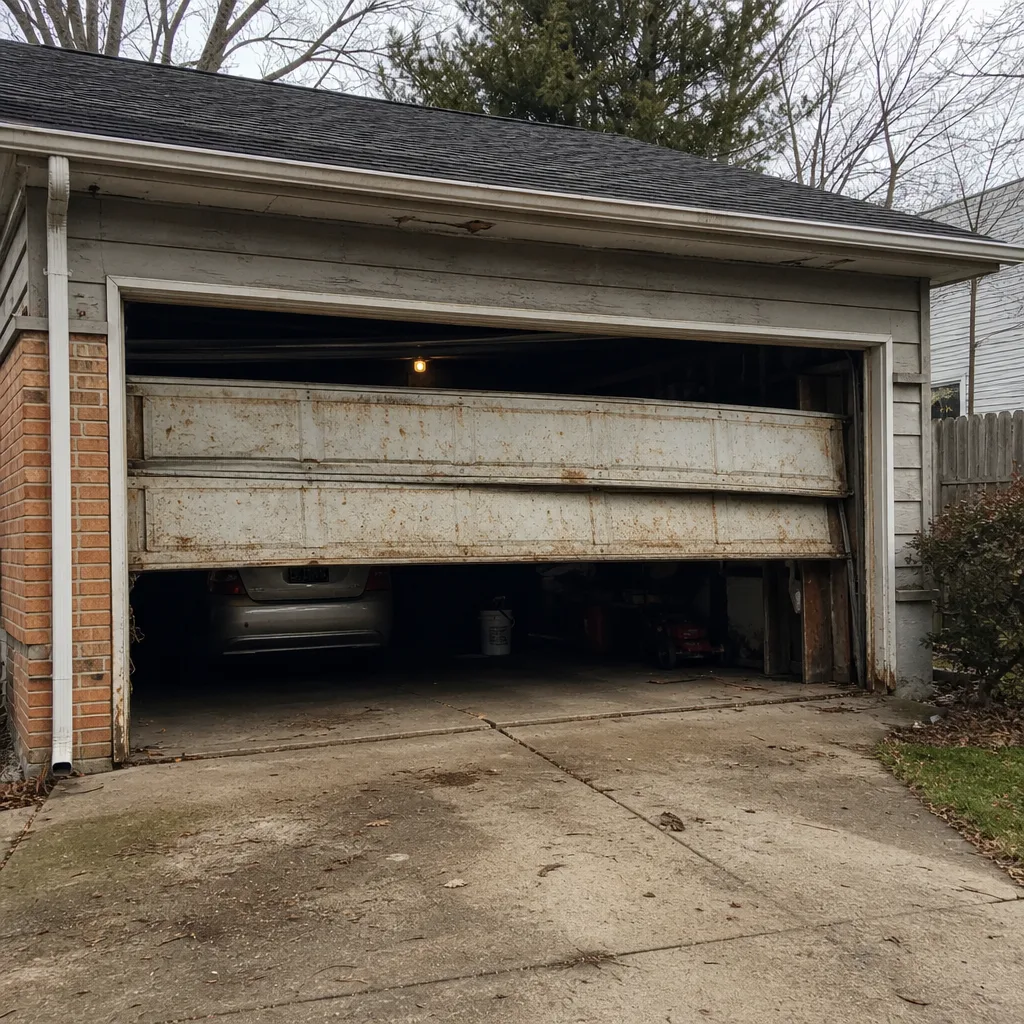
If the door is off its tracks, hanging, or making a sharp cracking sound, don’t attempt it. Shut the door’s power off at the opener, don’t lift it manually, and call a specialist. A technician with up to 11 years of experience will inspect the whole system, not just the broken part, and quote before any work begins.
How DIY Work Can Void Your Opener and Door Warranty
Opener manufacturers write a clause into nearly every warranty that reads something like this: damage caused by improper installation, modification, or repair is not covered. Read it strictly and it means this: if your door fails because a DIY repair was done wrong, the manufacturer can decline the claim. The opener might still work fine, but the door’s balance is off because the spring was wound to the wrong tension, and now the whole system is out of warranty.
The clause is there for a reason. Modern openers from LiftMaster, Chamberlain, Genie, and Craftsman are calibrated to work with a door that’s balanced to specific tolerances. When the balance is off, the opener runs hotter, the gear wears faster, and the safety reverse system stops working correctly. The manufacturer has no way to tell whether the failure came from their product or from the door it’s attached to, so the warranty language protects them and leaves you exposed.
Door manufacturers like Clopay, Amarr, Wayne Dalton, and Raynor have similar language around the door itself. If a panel fails because the door was dropped or the track was bent during a DIY spring swap, the panel warranty is gone. The spring might have been the only thing that failed originally, but the DIY repair turned a $180 to $340 repair into a full system replacement.
The fix is straightforward. Keep a record of professional service on the door and the opener, use a specialist who works on your specific brand, and stay inside the warranty. Manufacturers honor claims far more readily when the service history is documented and done by trained technicians. That’s one reason we focus on brand-depth: our technicians are trained on the specific hardware in your home, which is exactly what a warranty claim needs.
The Liability Question Nobody Reads
Homeowner’s insurance covers a lot of things. What it does not reliably cover is a claim arising from a DIY-modified garage door that injures someone. If you replace your own spring, forget to rebalance the door, and a guest or family member gets hurt when the safety reverse fails, the insurance company can point to your unpermitted modification as the cause and deny the claim.
The nuance matters. If a properly installed professional door fails and injures someone, your policy handles it. If a DIY repair introduced a fault and that fault caused the injury, the insurer’s adjusters ask a specific question: who worked on the door, and to what standard? If the honest answer is “the homeowner, based on a video,” most policies treat it as your responsibility, not the insurer’s.
The same logic applies to whether the work complies with local codes or manufacturer specs. Most cities require a permit for structural work on a garage, including replacement of certain door systems, so it’s worth asking the Polaris building department what applies to your job before you start. A permitted installation has a paper trail. A DIY swap doesn’t.
For property managers and landlords, this gets worse. If a tenant is injured by a door that a landlord repaired or a handyman touched, the liability sits with the company that did the work. That’s largely why we see property managers in Polaris prefer a specialist with brand training on every job, even for small repairs; the paper trail is the point.
The bottom line: DIY sensor work has no real liability. DIY spring work can leave you personally exposed for an injury, in addition to everything else. That asymmetry alone should settle most decisions.
Tools and Time: DIY vs a Professional Call
Most DIY decisions come down to two numbers: what the tooling costs and how long the job takes. Garage door work is one of the few trades where the tools alone often exceed the professional service price for a first-time job. That’s the honest comparison, not a scare tactic. If you already own the correct tools or work on your door regularly, the math tilts your way. If you don’t, it doesn’t.
A simple side-by-side:
- Sensor alignment. DIY: 10 minutes and a screwdriver. Pro: not needed. Verdict: DIY.
- Lubrication. DIY: 20 minutes and a lubricant can. Pro: rarely called for this. Verdict: DIY.
- Remote reprogramming. DIY: 5 minutes and the manual. Pro: not needed. Verdict: DIY.
- Spring replacement. DIY: 3 to 5 hours, $60 to $120 in tools (winding bars, clamps), plus the spring itself. Pro: usually under an hour, typical estimate $180 to $340 per spring. Verdict: pro.
- Cable replacement. DIY: high injury risk, requires correct cable spec and tension knowledge. Pro: routine. Verdict: pro.
- Track realignment. DIY: fiddly and hard to get right without door balance knowledge. Pro: routine. Verdict: pro.
- Opener replacement. DIY: 3 to 6 hours, requires wiring knowledge and safety reverse calibration. Pro: routine, and calibration is included. Verdict: pro.
The pattern across almost every Polaris door we’ve worked on holds: the tool cost and the calibration burden push the borderline tasks toward the professional column. The easy tasks stay easy.
If you’re considering a DIY opener swap on a LiftMaster or Chamberlain unit, watch for the safety reverse calibration step. It’s the single step most DIY replacements skip and the one most responsible for future problems. Our team confirms this on nearly every opener call we take.
A Framework for Making the Decision
Here’s the framework we suggest to Polaris homeowners. It’s not complicated, but it works whether the task is sensor alignment or a full install.
- Is there stored energy in the component? Springs and cables both hold energy. If yes, specialist only. Full stop.
- Does the task move weight? A door weighing 150 to 300 pounds isn’t meant to be lifted manually. If the answer is yes, specialist.
- Will the door leave its tracks? Track repairs, roller replacement above the tension spring, and any removal of the door panel from the tracks are specialist tasks.
- Would a mistake compromise safety reverse or door balance? If yes, specialist. The safety reverse is the one feature that stops the door from crushing a child. It’s not a DIY calibration.
- Does the work risk the warranty? If the manufacturer’s language excludes DIY modification, and most do, specialist.
- Does the work require tools you don’t already own? If the tool cost approaches the professional price, use the pro.
- Is it small, safe, and reversible? Sensor, lubrication, remote, weatherstrip. That’s your DIY column.
Two rules of thumb cut through the whole list. First: if the door has any tension in it, you don’t touch it. Second: if the answer to more than one of the questions above is “yes, but,” that’s a specialist job, even if the first answer felt safe.
We’d rather explain the framework than argue every individual case. If you’re on the fence, the fastest resolution is a phone call. We’ll tell you honestly whether your task is DIY or specialist, and free estimates are standard.
What Makes Polaris Doors Different
Doors in the Polaris area face a specific set of conditions that shape what fails and what lasts. Spring fatigue is common because Polaris garages swing between cold winters and hot, humid summers, and every one of those cycles works the spring. Doors near the Polaris Fashion Place corridor and the neighborhoods around Worthington are often original builder installations from a couple of decades ago, which means springs are past their expected cycle count and rollers are worn. Doors in nearby Lewis Center and Powell, closer to the reservoirs and the tree cover, tend to collect more moisture and organic debris on the tracks, which speeds up corrosion on rollers and hinges.
The housing mix matters too. Larger two- and three-car garages are common around Polaris, and those wider doors carry more weight. That means more stress on springs, which means spring failures cluster in the wider doors. That pattern shows up regardless of brand: we see it across Clopay, Amarr, Wayne Dalton, and Raynor installs alike.
What this means for the DIY decision is simple. Around Polaris, doors are often older, wider, and more heavily loaded than the doors in the tutorial videos homeowners watch. The margin for error on a spring swap is narrower than it looks. The right call, almost every time, is to have a specialist do the tension work and a homeowner handle the light maintenance. Pay attention to sounds and balance changes between service calls; a door that starts running slow or fast is telling you something.
The other local factor is climate. Freeze-thaw cycles work the door hardware, and the seasonal transition in spring and fall is exactly when we see the most spring and cable problems in the region. That’s also the best time to have a technician inspect the door: not because anything’s necessarily wrong, but because the inspection catches the balance and safety reverse issues before they become a bigger job.
Common Mistakes to Avoid
- Using a screwdriver or pliers in place of winding bars. The single most common cause of DIY spring injuries. There’s no safe substitute; the tool exists for a reason.
- Assuming a generic spring will fit. Springs have three critical specs: wire gauge, length, and inside diameter. Get one wrong and the door won’t balance or will break the spring quickly.
- Replacing only one spring of a matched pair. When one spring of a pair breaks, the other is at or near the same cycle count. Replacing one leaves you back on the phone in a few months.
- Ignoring the safety reverse test. After any service, test the safety reverse by placing an object in the door’s path. If the door doesn’t stop and reverse, the door is dangerous. Many homeowners skip this check.
- Using the wrong lubricant. WD-40 is a solvent, not a lubricant, and it washes away the grease your hinges need. Use a proper garage door silicone or lithium product.
- Lifting a broken door manually. A door with a broken spring is under the full weight of gravity with nothing balancing it. It can come down hard. Unless your opener is attached to a proper emergency release and the door is safe to lift, don’t.
- Assuming your homeowner’s policy covers DIY mistakes. It usually doesn’t when the repair introduced the fault. Check before you start, not after.
See the difference
 Before
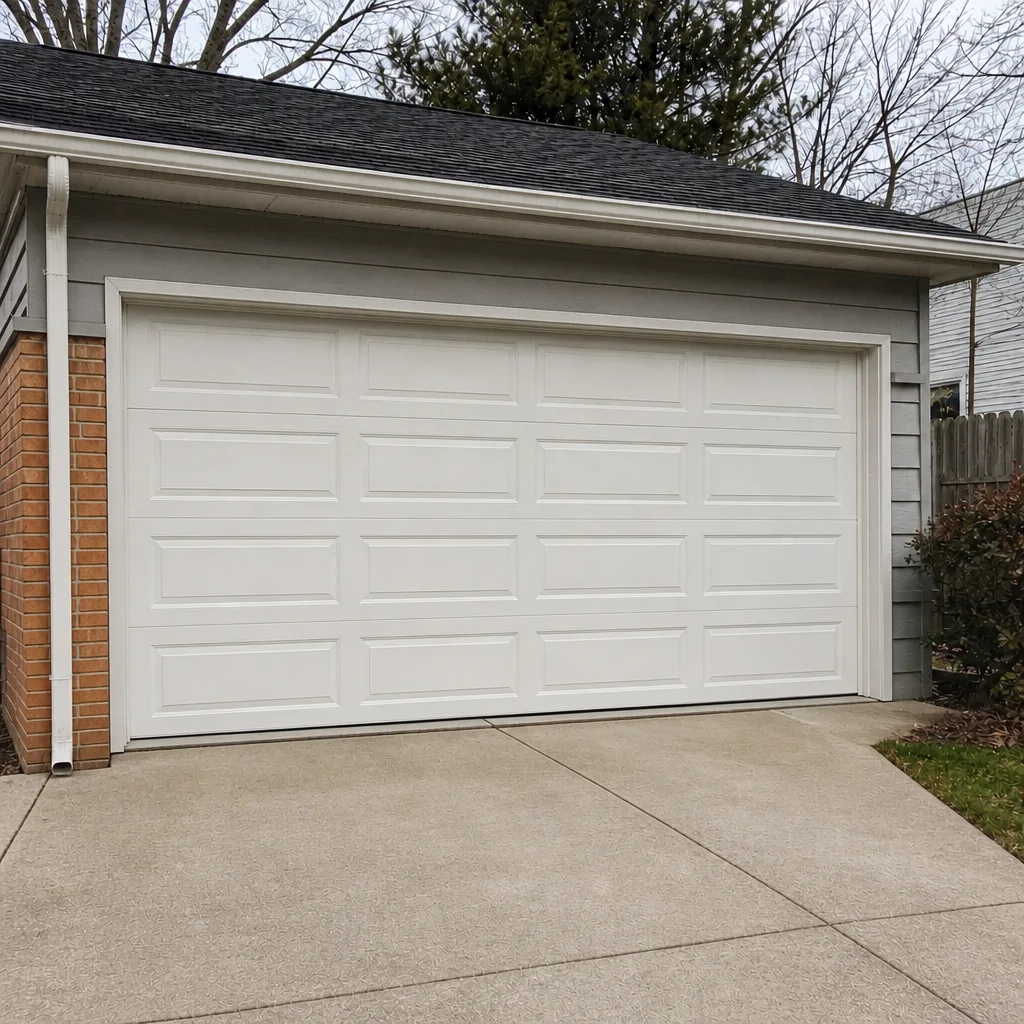 After
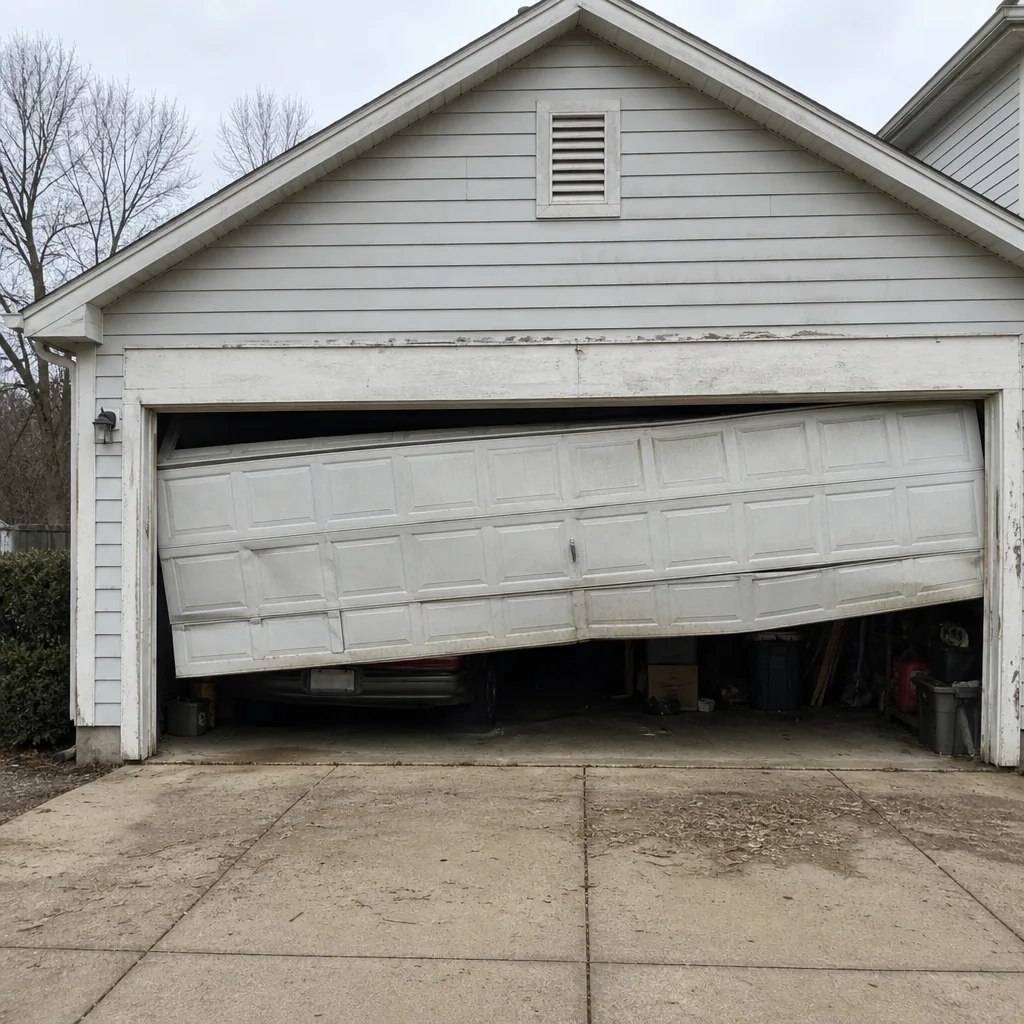 Before
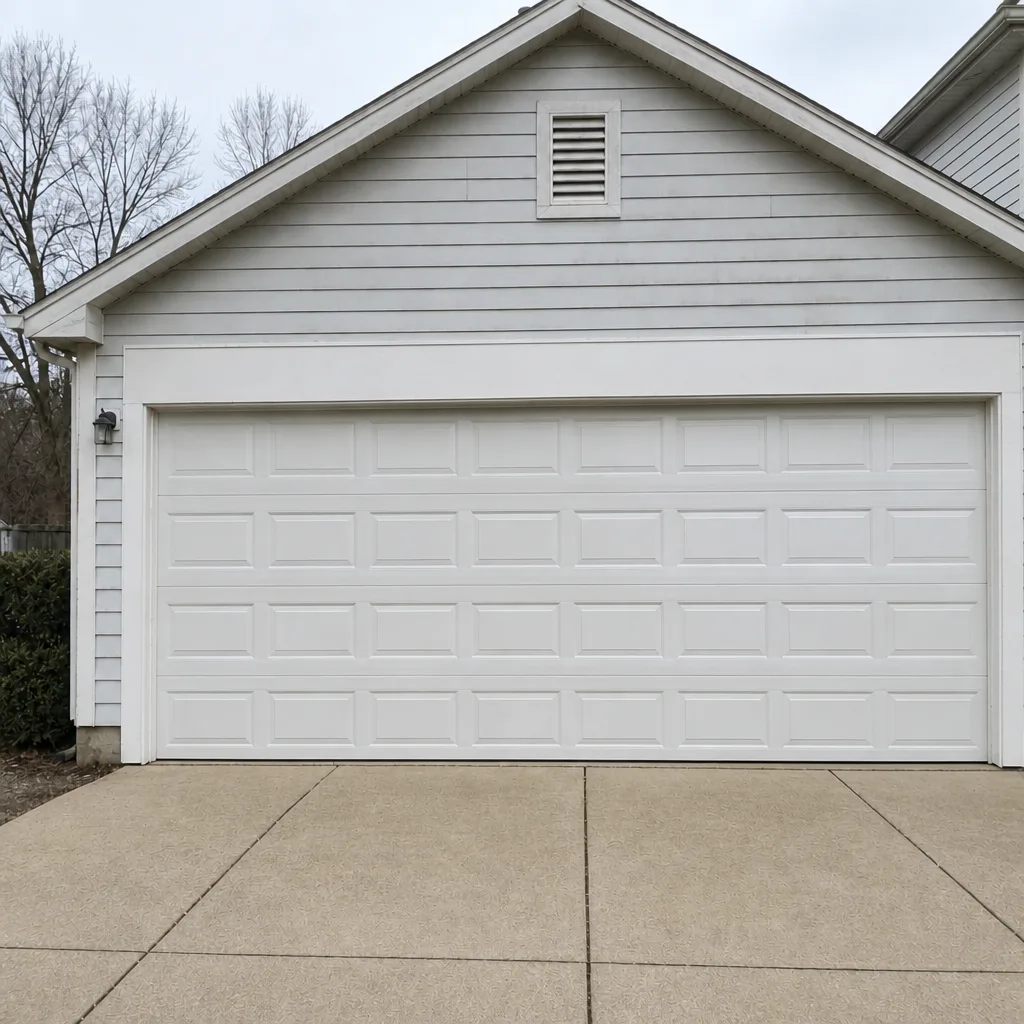 After
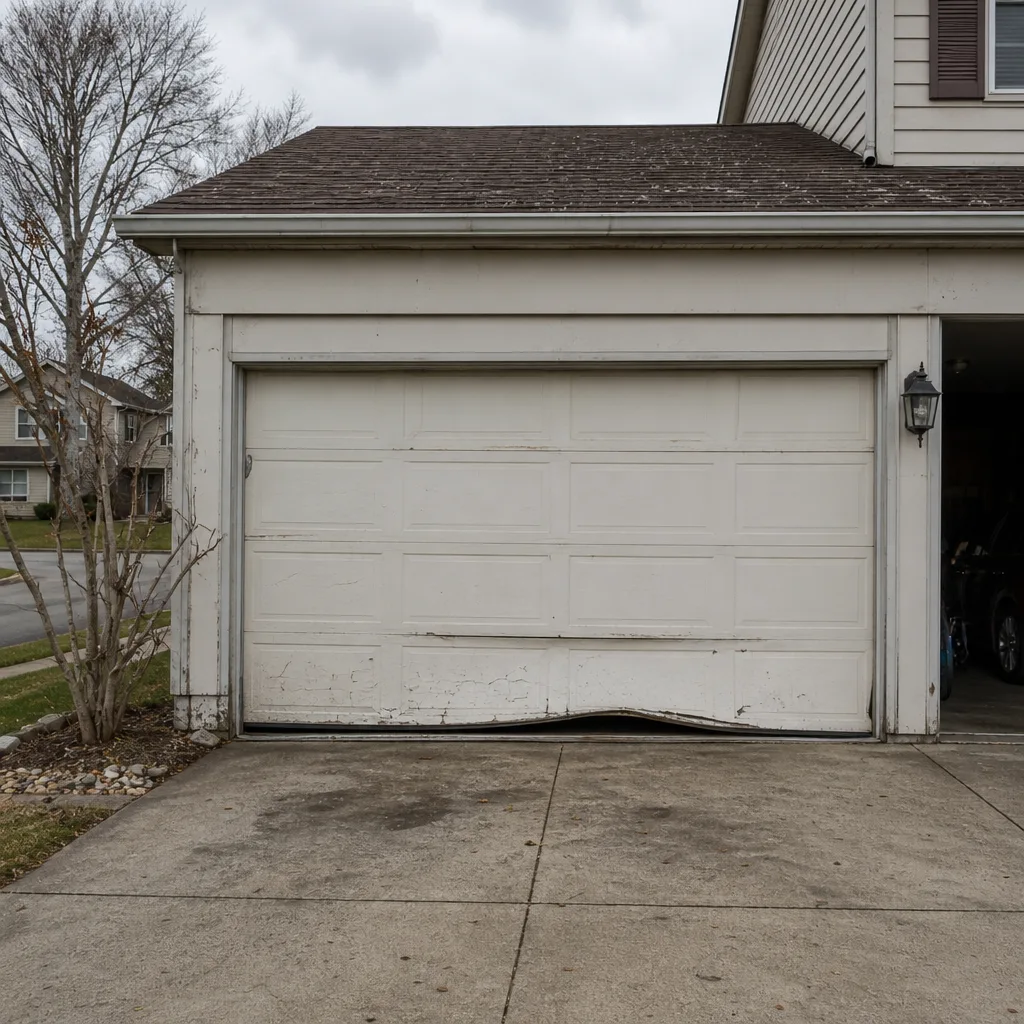 Before
 After
When to Call a Professional
Call a specialist when the door has stored tension, when it’s off balance, when you hear a sharp crack from the spring area, when a cable is frayed or loose, or when a door has come off its track. Call when the safety reverse fails, when the opener’s force limits are off, and when a garage door has to be replaced rather than repaired. Call when the door is wider than a single car and heavier than average. Call when you’re not sure. Around Polaris, our team handles all of it, from spring replacement to opener repair to full installs, with brand-specific training on the systems in your home.
Garage Door Repair Polaris offers free estimates in Polaris; call (833) 842-9208 to schedule an inspection or get a written price before any work starts. We’ll tell you honestly whether the job is something you can handle on your own.
Frequently Asked Questions
No, you shouldn’t. A torsion spring stores enough force to cause serious injury, and the winding process requires specific tools and training. The professional estimate for one spring typically runs $180 to $340 in the Polaris market, which is far less than the cost of a DIY injury or a warranty-voided door. Call (833) 842-9208 for a free written quote.
Yes, sensor alignment is one of the safe DIY tasks. The photo-eye units at the bottom of the track can be loosened and re-aimed until both indicator lights come on solid. It takes about ten minutes and there’s no tension risk. If the sensors stay out of alignment or the door still reverses randomly, call us; that points to a wiring or opener problem.
Often, yes. Most manufacturers, including the major opener and door brands, exclude damage caused by improper installation or modification from warranty coverage. If a DIY repair causes a balance problem or a component failure afterward, the manufacturer can decline the claim. Professional service keeps the warranty intact, and that’s why brand training matters for anyone doing the work.
It depends on the policy and the specific facts, and often it doesn’t when a DIY modification caused the injury. If a professional install failed and someone was hurt, your policy typically handles it. If a homeowner repair introduced the fault, the insurer may deny the claim. Check your policy before starting any tension work.
DIY spring replacement often costs $60 to $120 in tools plus the spring itself, and takes a first-timer several hours. A professional estimate in Polaris is typically $180 to $340 for one spring, with a matched pair roughly double, and the job is finished in under an hour. Once you account for tool cost, time, injury risk, and warranty impact, the professional quote wins more often than not. Call (833) 842-9208 for a free, written estimate.
You can, but the safety reverse calibration and force limit adjustments are the steps most DIY replacements miss. Those are the settings that decide whether the door stops when it hits something. If you do install a new opener, have a specialist confirm the door balance and safety reverse afterward. Our technicians work on LiftMaster, Chamberlain, Genie, and Craftsman systems, so the calibration is routine here.
Yes. Our technicians are trained on the industry’s leading brands, including Clopay, Amarr, Wayne Dalton, Raynor, LiftMaster, Chamberlain, Genie, and Craftsman. If we don’t recognize the model, we’ll say so before we book the call. That brand-specific training is why we can often resolve the problem in one visit rather than ordering parts and returning.
The Bottom Line
The DIY-vs-pro decision for garage door work comes down to one question: does the task involve stored energy or weight? Sensors, lubrication, and remote reprogramming are safe for a careful homeowner. Springs, cables, tracks, and full installs require a specialist, every time, because the physics doesn’t care about a video. The tool math usually favors the professional too, and warranty and liability protections sit firmly on the pro side. Around Polaris in particular, older and wider doors make the margin for error narrower than the average tutorial assumes. When in doubt, call and ask.
Garage Door Repair Polaris is a garage door specialist, not a general contractor. If you’re ready to schedule an estimate or get a second opinion on a door that’s starting to feel off, call (833) 842-9208. Estimates are free, and the price is written and agreed before any work begins. Whether it’s a spring, a cable, an opener, or a full replacement through a Clopay, Amarr, Wayne Dalton, or Raynor door, we can handle it in one visit.
Written by the team at Garage Door Repair Polaris.