Top Signs You Need Garage Door Service – Don’t Ignore These
A garage door that takes three seconds longer to close than it did last spring isn’t “getting old.” It’s telling you the spring tension is off, and a spring running under the wrong load fails faster and less predictably than one that’s properly adjusted. Most garage door failures don’t come out of nowhere. They give you weeks of warnings that homeowners mistake for normal aging. If you’d rather not climb a ladder and guess, call (833) 842-9208 and we’ll tell you what your door is doing.
Key Takeaways
- Uneven movement, grinding, and door drift are three separate problems pointing at three separate parts.
- A slow door is the most underrated warning sign – it usually traces back to spring tension, worn rollers, or opener force settings.
- A 30-second balance test tells you more about spring health than any other check you can do safely.
- Frayed cables, flat rollers, a crushed bottom seal, and rust patches are the four things most homeowners never look at.
- Ignoring one symptom tends to chain into the next, and that’s where small repairs get expensive.
What’s the difference between cosmetic wear and a real mechanical warning sign?
Cosmetic wear is surface-level and doesn’t change how the door moves. Mechanical warning signs change the way the door operates – and those are the ones worth acting on. Scuffed paint, a faded panel, or a little dust on the tracks don’t threaten anything. Uneven movement, grinding, and drift do.
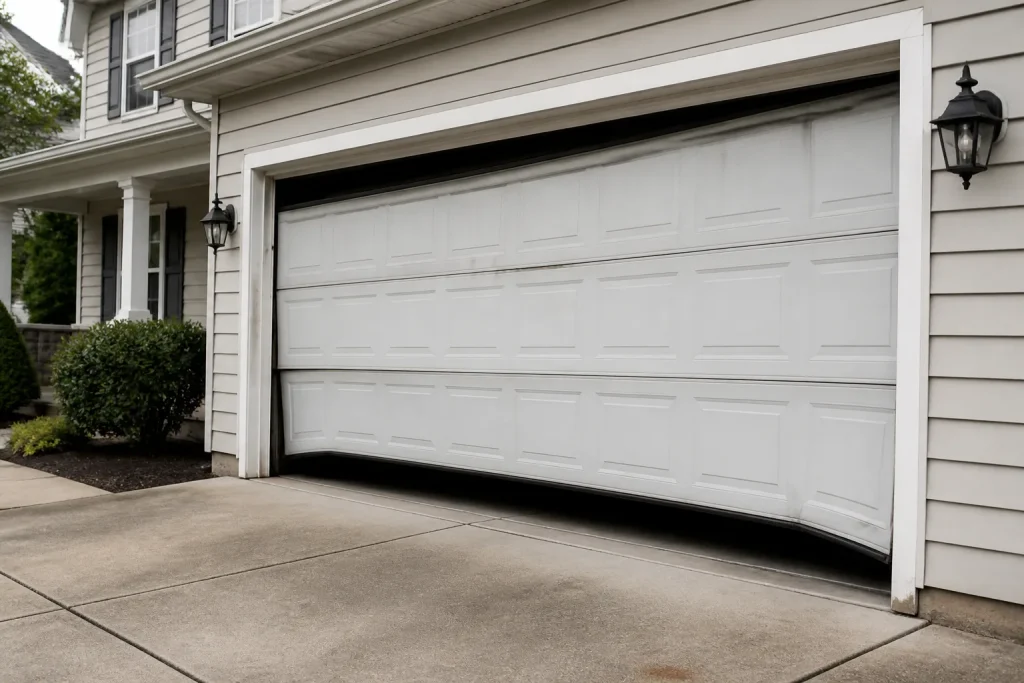
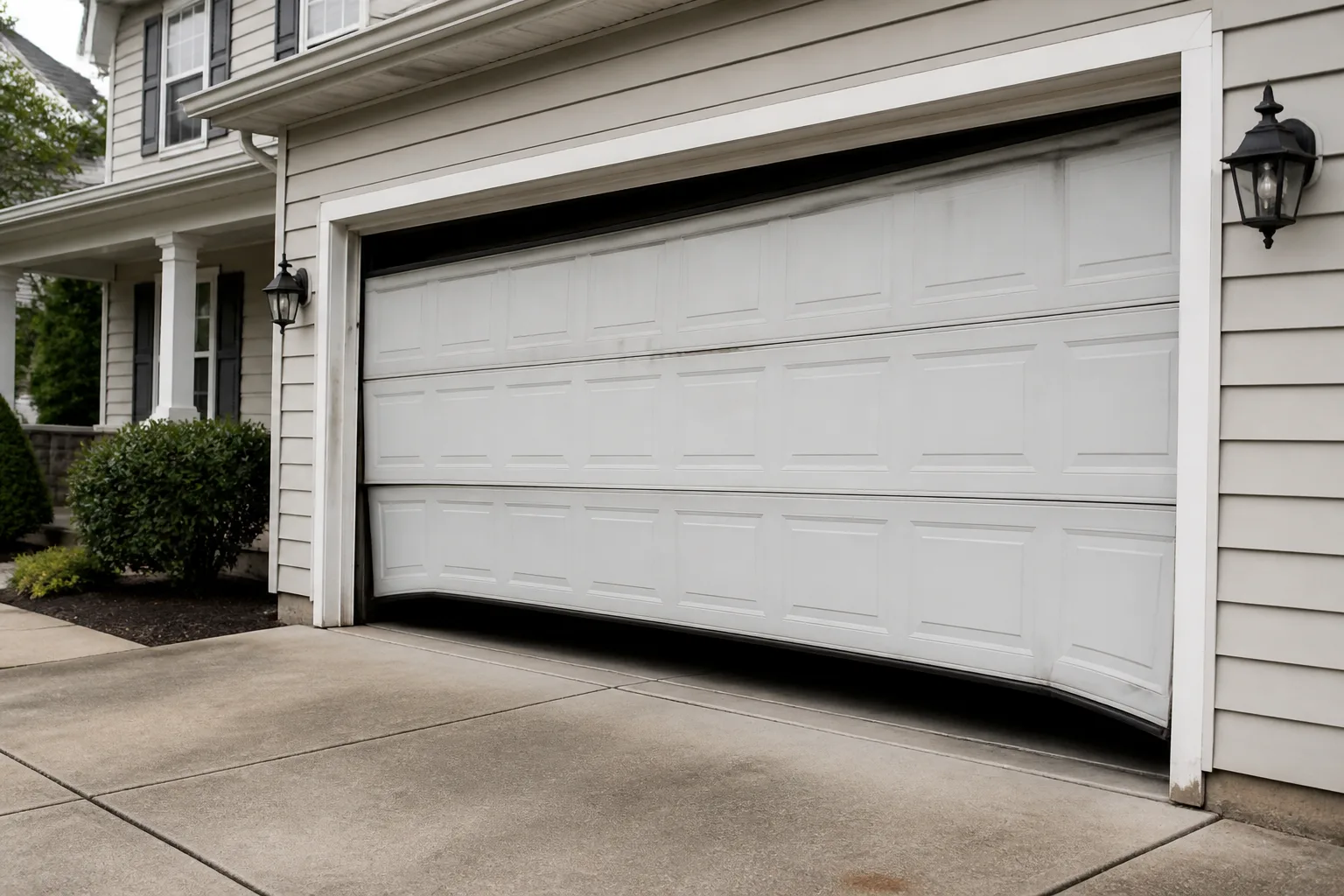
When a door rises crooked or one side lags behind, the panels are being pulled unevenly. That usually points at a tired spring on one side, a stretched or jammed cable, or a bent track. Left alone, the misalignment works its way into the hinges and eventually the door panels themselves. Grinding is different: it’s metal-on-metal contact, and it usually means a roller has seized or a hinge has worn through its bushing. Drift (a door that sags a few inches after it’s fully up, or creeps down from the open position) points squarely at spring balance. Three symptoms, three separate causes – and treating them as one generic “noisy door” is how people replace the wrong part.
In our experience across Polaris homes, the doors that fail suddenly are almost always the ones where a mechanical sign was dismissed as cosmetic for a season or two. Our technicians have up to 11 years of experience, and most can name the failing component from the sound alone.
Why is a slow garage door the warning sign most people miss?
Because a slow door still opens and closes, homeowners treat it as normal. It isn’t. A door that has gradually slowed down implicates three things, and each has a different fix:
- Spring tension. Springs lose force over thousands of cycles. As tension drops, the opener has to pull harder, so the door moves slower. This is the most common cause and the most important to catch early.
- Worn rollers. Seized or flat-spotted rollers add drag. The door still works, but it’s fighting friction the whole way.
- Opener force settings. Modern openers have adjustable force limits. If someone cranked the setting up to compensate for a dragging door, you’ve now got a machine working past its designed limit – which shortens its life.
A slow Genie or LiftMaster door in Polaris is usually telling you one of these three things. The fix is often simple – a roller swap, a spring adjustment, or resetting the opener force – but catching it early is what keeps it simple. That’s the whole point of this article.
How do you do the 30-second balance test?
The balance test checks whether your springs are carrying the door’s weight evenly. It takes half a minute and you do it with the opener disconnected, never with the door under power.
- Close the door fully and pull the red release handle to disconnect the opener.
- Lift the door by hand to about waist height, then let go.
- Watch what it does. A healthy door should hold roughly in place, maybe drifting an inch. A door that drops fast is spring-starved. A door that runs up on its own is over-tensioned. Either way, the springs need attention.
- Reconnect the opener before you use the door again.
What the result tells you: a door that won’t hold position is a door whose springs are not doing their job, and a spring working under the wrong load fails sooner and more unpredictably than one that’s correctly set. Please don’t try to adjust the springs yourself. Garage door springs sit under high tension and can cause serious injury if released wrong. This test is a diagnostic, not a repair – if the door drifts, that’s your cue to call.
What should you actually check visually on a garage door?
Most homeowners look at the paint and the panels. The four things that actually fail are lower down and easy to miss:
- Cable fraying. Look where the cables run down the sides. Frayed strands or a cable starting to unwind is a genuine safety issue – stop using the door and get it looked at.
- Roller wear. Steel rollers develop flat spots; plastic rollers crack and thin out. A worn roller won’t roll, it’ll drag and grind.
- Bottom seal compression. A crushed or torn bottom seal lets water and cold air in, and in a Polaris winter that matters. It’s a cheap part that most people never notice is failing.
- Hardware rust patterns. Rust concentrated on the hinges and bottom brackets tells you moisture is getting in and the hardware is weakening. Even spotting means it’s time to look closer.
None of these take long to check. A ten-minute walk around the door, once a season, catches most of them before they cascade.
What does delay actually cost you?
This is where the math gets uncomfortable. Take a door with one worn roller. It’s a small part and a cheap fix. Ignore it, and the dragging roller adds strain to the hinge, which wears out next. The strained hinge bends a track. Now the door isn’t tracking straight, which puts uneven load on the springs – and suddenly you’re not replacing a roller, you’re replacing a cable and drum assembly. That’s the chain: a $150 roller swap turns into a $400 cable-and-drum job because one symptom was shrugged off.
We see this in Polaris all the time, and it’s the same story whether the door is a Clopay, Amarr, or Wayne Dalton. When a customer calls because the door won’t close, the diagnosis often traces back to something that was visible months earlier. We stock parts for the major brands so a lot of these jobs get handled in one visit – but the better outcome is catching the problem before the chain starts. If your door is one of the eight leading brands we’re certified to service, we’ll know exactly what you’re working with.
When should you call a pro instead of watching and waiting?
Call us when you see any of these, and don’t wait for it to get worse:
- The door won’t hold its position in the balance test.
- You see frayed cables or hear grinding.
- The door moves crooked or drifts.
- The opener reverses for no visible reason.
- A spring has visibly broken (usually a loud bang and a door that won’t lift).
Springs and cables are the two things you should never touch yourself – they’re under enough tension to cause real harm. That’s garage door repair work for a specialist, and it’s the repair we handle most often. If the opener itself is the problem, garage door opener repair covers force settings, remotes, and the drive mechanism. Our technicians work only on garage doors, which means we’re not guessing our way through your door the way a general handyman might.
Related services in Polaris: opener repair, spring replacement, and new door fitting through garage door installation if the door is past saving.
The Bottom Line
Your garage door tells you it’s in trouble well before it stops working. Slow movement, uneven tracking, grinding, drift, and the four visual checks above are your early warning system – and catching them early is what keeps a cheap repair from turning into an expensive one. A spring replacement done right is worth more than a spring replacement done late. If you’re in Garage Door Repair Polaris territory and need help, Garage Door Repair Polaris offers free estimates and fair pricing – call (833) 842-9208 to get a professional eye on your door before the chain starts.
Frequently Asked Questions
Repair is the answer for most warning signs – slow movement, grinding, worn rollers, faded cables, and spring balance issues are all fixable on an otherwise sound door. Replacement makes more sense when the panels are structurally damaged, the door is beyond repair, or repeated fixes cost more than a new door. A specialist inspection will tell you which side of that line you’re on. Call (833) 842-9208 for a free estimate.
No. A slow door doesn’t recover on its own; it usually gets slower. The cause is spring tension, worn rollers, or opener force settings, and none of those correct themselves. The slower it gets, the more wear it puts on the rest of the system. Call (833) 842-9208 and we’ll diagnose it properly.
It can be. Grinding usually means metal-on-metal contact from a seized roller or worn hinge, which is a wear problem – but if it’s coming from the springs, cables, or tracks, it’s a safety issue. Stop using the door and get it checked. Springs and cables are under high tension and shouldn’t be handled without training. Call (833) 842-9208.
Once a year is a reasonable habit for most homes, and a balance test plus the four visual checks above can be done any time in between. In our experience, doors in Polaris that get looked at once a year get caught before a small part fails and takes a bigger one with it. For a free estimate on service, call (833) 842-9208.
Written by the team at Garage Door Repair Polaris.
Need Garage Door Help?
Call Garage Door Repair Polaris - the local pro we connect you with is licensed and insured, here with fast after-hours help in Polaris.
(833) 842-9208